
What happens when a customer searches “best near me” and your competitor shows up three times while you are nowhere to be seen?
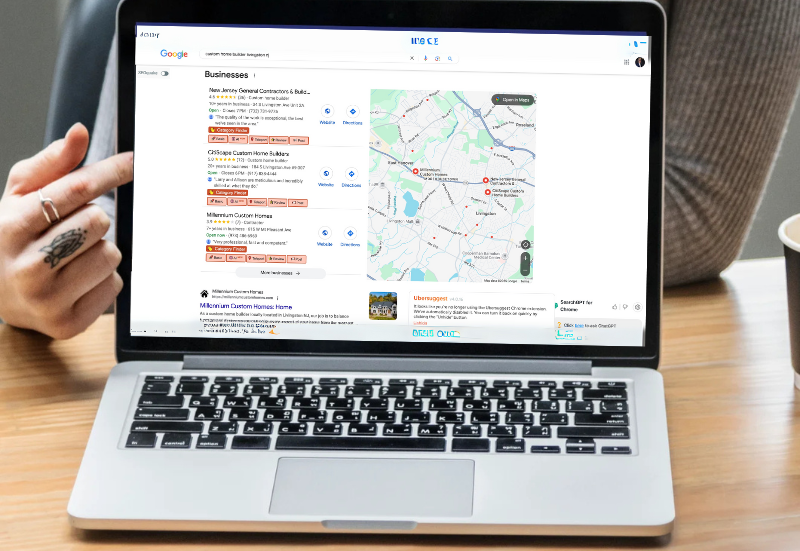
Local SEO is not magic. It is the set of signals that tells Google and other search platforms that your business is real, relevant, and trusted in a specific area. When those signals are clear, you show up more often in Maps results and local listings. When they are messy, you get skipped, even if your service is better.
Table Of Contents
- Local SEO Is Usually Lost In The Details
- Tip 1. Build A Google Business Profile That Does Real Work
- Tip 2. Create Location Focused Pages That Match How People Search
- Tip 3. Turn Reviews Into A Steady Stream, Not A Random Event
- Tip 4. Fix Citations So Google Stops Getting Mixed Signals
- Tip 5. Publish Local Content That Proves You Belong In The Area
- Conclusion
- FAQs
At Battle SEO, we spend a lot of time fixing the same local visibility problems across different industries. So we put together the five tips that move the needle most often. This is informational, practical, and built to help you get found by more customers without turning your website into a science project.
Local SEO Is Usually Lost In The Details
Most businesses are not failing at local SEO because they did one big thing wrong. They are losing because of a dozen small gaps.
A Google Business Profile is half filled out. Categories are close but not quite right. Service pages talk about what you do but never mention where you do it. Reviews exist, but nobody replies. Addresses and phone numbers are inconsistent across directories. Your competitor is not “better,” they are just easier for search engines to understand.
Here is a quick way to think about local SEO. It is a trust and clarity game. Search engines want to recommend businesses that look legitimate and likely to satisfy the searcher.
And yes, one more thing has changed recently. Customers do not only search on Google anymore. They search in map apps, in social platforms, and increasingly through AI powered search experiences that summarize local options. That is one reason we keep an eye on both traditional local SEO and AI visibility through our AI Optimization specialization work. The basics still matter, but consistency matters even more now.
Tip 1. Build A Google Business Profile That Does Real Work
Your Google Business Profile is often your first impression, even when people never click your website. It can show your hours, services, photos, reviews, and the questions customers ask before they call.
If your profile is half done, you are handing attention to whoever took the time to finish theirs.
Get The Fundamentals Tight And Consistent
Start with accuracy. Business name, address, phone number, website, and hours should match everywhere online. Then choose the best primary category and a small set of secondary categories that truly fit. Categories are not keywords. They are labels that help Google understand what you are.
Fill out services and products where appropriate. Add real photos of your team, work, storefront, and vehicles. Keep them current. If you do nothing else this week, tighten these fields.
- Primary category and strong supporting categories
- Service areas that match where you actually serve
- Services list with plain language descriptions
- Photos that look current and real
- Business hours including holiday hours
- A short business description that matches your site

Use Posts And Q And A Like A Customer Would
Posts are useful when you treat them like updates, not ads. Think seasonal hours, limited time services, new offerings, or simple educational notes.
Q and A is even more overlooked. Customers ask things like parking, pricing ranges, scheduling, and turnaround times. Answer them. If you leave them blank, you invite randomness, and sometimes incorrect answers from the public.
A quick gut check we use is simple. If a customer only sees your profile, do they feel confident enough to call.
Tip 2. Create Location Focused Pages That Match How People Search
A homepage that says “we serve everyone everywhere” rarely ranks for anything local. Google wants to match specific intent. People search “dentist in Ouray” or “roof repair near me” or “wedding florist in Austin.” Your site needs pages that clearly support those searches.
Put Local Intent Where It Counts
Local intent belongs in the places search engines and humans both notice.
Your title tags and headings should mention the service and the area in a natural way. Your main service pages should explain what you do, who it is for, and where you do it. If you serve multiple towns, do not cram them into the footer. Build useful location pages that actually help people.
We also like to include details that prove you are local. Landmarks, neighborhoods, driving directions, and service boundaries are all helpful when they are accurate and not forced.
Make Each Page Useful, Not Just Different
If you create ten city pages that all say the same thing with the city name swapped, you are building thin content. Customers can feel that. Search engines can too.
Instead, build each page around what is unique in that area. Common problems. Popular services. Weather related needs. Local regulations. Real examples. Photos from that location if you have them.

Tip 3. Turn Reviews Into A Steady Stream, Not A Random Event
Reviews are one of the strongest local trust signals. They influence clicks, calls, and rankings. Most businesses know this, but they treat reviews like something that happens when customers feel extra happy.
We like systems better than luck.
Ask At The Right Moment And Make It Easy
The best time to request a review is right after a successful outcome. For a service business, it might be right after the job is completed and the customer confirms they are satisfied. For a professional service, it might be after a clear win, a delivered result, or a positive milestone.
Keep the task simple. Text message links work well because they remove friction. Email works too if your customers are already email heavy.
Respond Like A Real Business, Not A Script
Replying to reviews is not only polite. It also sends freshness and engagement signals.
Thank positive reviewers in a specific way, even if it is short. For negative reviews, stay calm, do not argue, and offer a path to resolution. A good response shows future customers that you handle issues professionally.
Here is a question that matters more than people expect. If a stranger read your last ten review replies, would they want to work with you.
Tip 4. Fix Citations So Google Stops Getting Mixed Signals
Citations are online mentions of your business name, address, and phone number. Think directories, map apps, industry listings, and data aggregators.
When your citations are consistent, they reinforce trust. When they are inconsistent, they create confusion. Confusion leads to weaker rankings and fewer calls.
Start With Accuracy Then Expand
Begin with your most important sources. Google Business Profile, your website, and the major data platforms that feed other directories.
Then look for the usual problems. Old phone numbers. Old suite numbers. Variations of your business name. Duplicate listings. Incorrect categories.
If you moved locations, changed phone numbers, or rebranded, citation cleanup matters even more. A stale address floating around the internet can haunt your Maps visibility for months.
Do Not Chase Hundreds Of Directories
More is not always better. We would rather see clean, accurate data across the major sources and the most relevant industry directories than a messy presence across 300 random sites.
Local SEO is not a directory collecting hobby. It is about removing doubt.
Tip 5. Publish Local Content That Proves You Belong In The Area
Local content is how you build relevance beyond your service pages. It also gives you more chances to rank for long tail searches, the ones that turn into high intent leads.
Write Like A Local, Not Like A Marketer
Good local content answers real questions.
A plumber might publish a guide on preventing frozen pipes in your region. A dentist might cover what to do in a dental emergency and what to expect. A contractor might explain permit basics for common remodels. A photographer might explain the best seasons for outdoor sessions in your town.
If you are wondering what to write, start by listening to your own customers. Every repeated question is a blog post. Every common concern is a service explainer. Every misconception is a myth busting article.

Earn Local Links The Natural Way
Links still matter, especially when they come from local sources that make sense.
Partnership pages, local sponsorships, event participation, chambers of commerce, and local press mentions can all help. The key is legitimacy. Get involved in things you actually support and let the online signals follow.
Another question we like here because it keeps content grounded. Would a customer bookmark this, or is it only written to rank. If it is helpful, it tends to rank better anyway.
Conclusion
Local SEO gets easier when you stop chasing tricks and start tightening fundamentals. A complete Google Business Profile, location focused pages, a steady review system, clean citations, and useful local content will put you in front of more customers in the places they actually search. If you are consistent with these five tips for a few months, you usually see two changes. More visibility in Maps and more qualified calls from people who are ready to buy.
A good SEO strategy agency also knows where most businesses quietly lose ground, like mismatched categories, duplicate listings, weak internal linking between service and location pages, and missed conversion fixes on key landing pages. They track what matters, calls, form fills, direction requests, and keyword movement in your real service areas, then adjust based on what is actually driving revenue. And they build a plan that protects your rankings long term, so growth does not disappear the moment you stop posting.
FAQs
How long does local seo take to show results?
You can sometimes see early movement in a few weeks, especially from Google Business Profile improvements and citation cleanup. Stronger, stable results usually take a few months because trust signals build over time.
Should we focus more on google business profile or our website?
Both matter. Google Business Profile often drives calls faster, but your website supports rankings, conversions, and broader search visibility. When they match and reinforce each other, local results improve more consistently.
Do we need a separate page for every city we serve?
Only if you can make each page genuinely useful and specific. If you cannot, it is better to create a strong service area page and a few high quality location pages for your primary markets.
How many reviews do we need to compete?
There is no magic number. We care more about steady growth, recent reviews, and strong responses. In competitive areas, more reviews help, but quality and consistency matter just as much as volume.
What if our business does not have a storefront?
That is common for service area businesses. You can still rank well with a properly set up Google Business Profile, accurate service areas, strong local pages, and consistent citations. The key is clarity about where you serve and what you do.
Get Found Locally And Turn Searches Into Paying Customers
→ Optimize your Google Business Profile so you show up in Maps results
→ Build location pages that bring in ready to buy local traffic
→ Grow reviews and citations that strengthen trust and rankings
Strengthen your local visibility with Battle SEO and start attracting more customers from your service
★★★★★ Rated 5/5 by 10+ Satisfied Clients

Mike Guess is an accomplished marketing expert with over 15 years of experience leading various companies to digital success. He is the CEO of Battle SEO and 39LINKS.COM, overseeing bespoke SEO and digital marketing campaigns that enhance online visibility and drive client growth. He also serves as Chief Marketing Officer and partner at We Speak Meat, where he drives brand strategy and customer engagement for a premium meat retailer.
Related Articles: