TL;DR:
- AI SEO trends in 2026 focus on citation presence, content freshness, and technical fundamentals crucial for AI-driven search visibility. Building authoritative, regularly updated content and optimizing local signals are essential for sustained success in synthesized search environments. Measuring AI citations, referral traffic, and content extractability is vital for evaluating true SEO performance beyond traditional rankings.
The AI SEO trends shaping 2026 are not a distant forecast anymore. They are actively reshaping how search engines discover, synthesize, and surface content today. For digital marketers and SEO professionals, the challenge is no longer whether to adapt. It is knowing which shifts deserve your attention and which so-called “AI SEO hacks” are a distraction from work that actually moves the needle. This guide breaks down the five most consequential trends, the criteria for evaluating them, and the practical adjustments your strategy needs right now.
Key Takeaways
| Point | Details |
|---|---|
| Fundamentals still lead | Google confirms no separate AEO or GEO strategy is needed; strong content and technical SEO remain the foundation. |
| Citation frequency is the new ranking | Being cited in AI-generated answers drives more organic visibility than raw ranking position alone. |
| Content freshness is non-negotiable | AI Information Agents run 24/7, meaning stale content loses citations to competitors who update regularly. |
| Local SEO needs AI alignment | Structured data, Google Business Profile optimization, and AI-powered insights are now central to local discovery. |
| New metrics are required | Track AI citation presence and AI-generated referral traffic alongside traditional KPIs to measure true performance in 2026. |
1. How to evaluate AI SEO trends in 2026
Not every trend demanding your attention deserves it. Before reallocating budget or rewriting content strategies, apply a consistent framework to assess what actually matters.
The most important filter right now is content uniqueness. Google’s May 2026 guide makes clear that valuable, non-commodity content is the foundation. If your content answers a question the same way fifty other pages do, no amount of AI optimization will fix that.
Technical fundamentals remain just as critical. Crawlability, indexability, Core Web Vitals, and page experience are not legacy concerns. They are table stakes for being included in any AI synthesis at all. A page Google cannot crawl is a page no AI Overview will cite.
The shift from ranking position to citation frequency is the single biggest mental model change for 2026. Citation presence in AI answers drives organic click-through more than raw position, which means your content needs to be structured for extraction, not just relevance.
- Is this trend measurable? If you cannot track AI citation presence, AI referral traffic, or share of model, the trend is too abstract to act on.
- Does it reinforce or replace fundamentals? Trends that reinforce technical quality and content depth are worth pursuing. Trends that ask you to game a system with shortcuts are not.
- Is there clear search engine guidance? Google’s published positions on what works carry more weight than speculation from any single conference talk.
Pro Tip: Before adopting any new AI SEO tactic, check whether Google has explicitly addressed it. Their 2026 content guide dismisses five common AI-specific tactics as unnecessary, saving you weeks of wasted effort.
2. AI Overviews and the shift to content extractability
AI Overviews have changed the calculus on organic click-through rates. The data is telling. Organic CTR with AI Overviews present was 1.3% in December 2025, then rose to 2.4% by February 2026, showing some recovery but still well below CTR in searches without an AI Overview present.
| Search Scenario | Approximate Organic CTR |
|---|---|
| No AI Overview present | 4%+ (varies by position) |
| AI Overview present, not cited | 1.3% to 2.4% |
| AI Overview present, brand cited | Significantly higher |
| Paid search with AI Overview | 13% to 16% |
The clear takeaway: being cited in the AI Overview is the differentiator. Passive presence on page one is no longer enough.
To get cited, your content needs to work as a source. Content that AI systems cite reliably is content where individual facts remain meaningful when pulled out of their original paragraph. Think of it as writing sentences that can stand alone as reference points, not just sentences that flow beautifully within a piece.
Practical techniques include writing direct answer statements early in each section, using descriptive subheadings that signal the topic without requiring surrounding context, and backing claims with verifiable sources. Schema markup for articles, FAQs, and how-to content also improves the probability that your content gets parsed and surfaced correctly.
Pro Tip: Run your own content through a simple extractability test: copy a single sentence from a key section and ask whether a reader with zero context would understand what it means. If they cannot, rewrite it until they can.
3. Information Agents and the new content freshness imperative
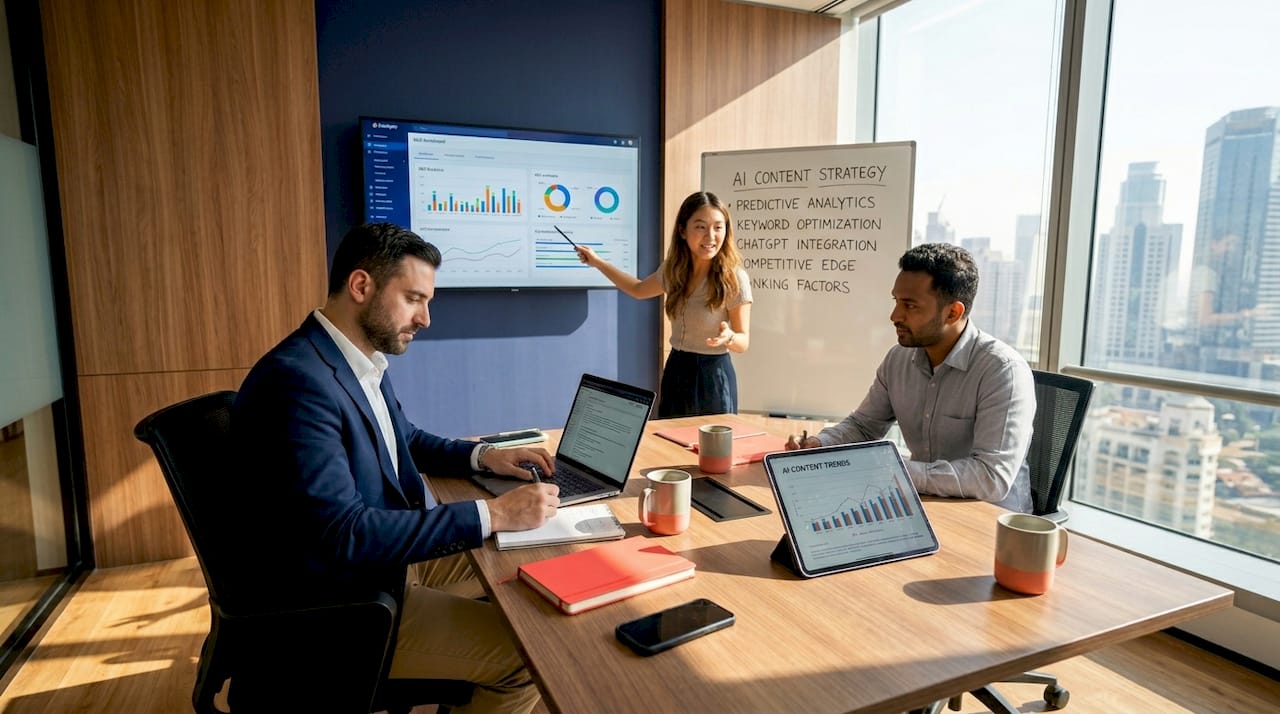
Google launched Information Agents in summer 2026 in the U.S., and they represent one of the most significant structural changes to how SEO operates. These agents run around the clock, continuously scanning, synthesizing, and updating information for users based on specific queries. The traditional model of publishing a post and letting it rank for years is over for competitive topics.
What this means practically:
- Static content loses citations over time. If a competitor updates their pricing page, product specs, or industry analysis before you do, their content becomes the fresher source and gets cited instead.
- Topic-specific source assets matter more than ever. A single authoritative page covering a well-defined topic in depth, regularly updated with new data, outperforms scattered blog posts covering the same subject.
- One-time publishing is a liability. Your content calendar needs to include regular audits and updates, not just new post creation.
- Supporting evidence strengthens citation probability. Pages that cite original research, include recent statistics, or reference current events give Information Agents stronger justification for recommending them.
The shift to agentic search means SEO is now an ongoing maintenance discipline, not a one-time optimization project. Teams that set quarterly content review cycles now will be significantly better positioned than those still operating on an annual audit schedule. Adapting to AI search platforms is no longer optional for anyone competing in high-stakes markets.
4. Measuring success beyond rankings
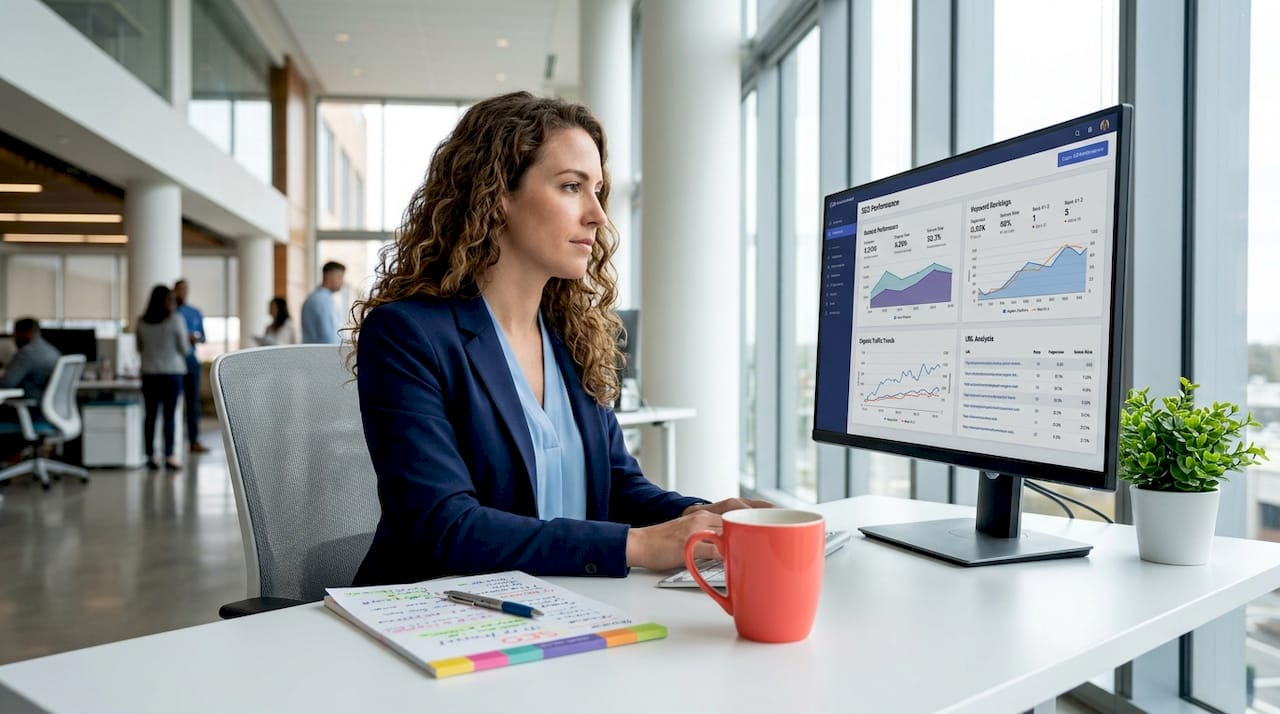
Traditional SEO reporting is no longer sufficient. A page that ranks third but gets cited in every relevant AI Overview may drive more meaningful traffic than a page ranking first without any AI presence. New KPIs are needed to capture what performance actually looks like in a synthesis-first search environment.
Here is how to restructure your measurement approach:
- Segment AI Overview performance separately. In Google Search Console, monitor AI Overview presence and citation status by query, then compare CTR and impressions between queries with and without AI Overview appearances.
- Track AI-generated referral traffic. Platforms like ChatGPT, Perplexity, and Gemini are increasingly sending direct referral visits. Segment this in your analytics platform as a distinct traffic source.
- Measure citation frequency by topic. Monitor how often your brand or content appears in AI-generated summaries for your core keyword clusters. This is your “share of model” metric.
- Adjust ROI reporting accordingly. When a piece of content drives AI citations that suppress direct CTR but lift brand awareness and branded search volume, that value needs to be captured in your reporting framework.
- Audit paid and organic together. Paid CTR ranges from 13% to 16% even with AI Overviews present, making paid search a reliable complement when organic CTR is suppressed in competitive queries.
The brands winning in 2026 are treating AI visibility as a first-class metric, not an afterthought layered onto a traditional ranking report.
5. Integrating AI optimization with technical SEO fundamentals
One of the most useful things Google did in May 2026 was publish a list of five AI-specific tactics that are simply unnecessary: llms.txt files, content chunking, AI rewrites of existing content, inauthentic brand mentions, and AI-specific schema markup. That list tells you exactly where not to spend time.
What still matters, in practice:
- Core Web Vitals and page experience. Speed, interactivity, and visual stability directly affect whether Google’s systems can render and index your content effectively.
- Semantic HTML. Proper heading hierarchy, descriptive alt text, and clean markup help both accessibility tools and agentic AI systems interpret your pages correctly. Agentic AI experiences may use accessibility trees and rendered content analysis beyond standard SEO signals.
- Internal linking and site structure. These still guide both crawlers and AI systems toward your most authoritative content.
- Keyword and backlink strategy. These have not been replaced. They have been supplemented. Combining traditional SEO with AI strategies gives you a compounding advantage most competitors are not yet building.
| Tactic | AI Optimization Value | Technical SEO Value |
|---|---|---|
| Core Web Vitals | High | High |
| Semantic HTML | High | High |
| Backlink building | Moderate | High |
| Content chunking | Low | Low |
| AI-specific schema | None | None |
| Topic authority pages | High | High |
The practical message here: protect your technical foundations before adding AI-specific layers on top.
6. Local SEO adaptations for AI-driven search in 2026
The local SEO trends in 2026 are being shaped by how AI systems understand user intent at a geographic and contextual level. Searches like “best HVAC company near me” are now generating AI-synthesized answers that pull from multiple local signals, not just proximity. That changes what it means to optimize for local visibility.
Key shifts worth acting on now:
- Google Business Profile is an AI signal, not just a directory listing. Regular updates, detailed service descriptions, photo uploads, and review responses all feed into how AI systems represent your business in local queries.
- Structured data with local specificity matters. Schema markup for local business, service areas, hours, and reviews makes it easier for AI systems to include your business accurately in synthesized answers.
- Authoritative local content builds citation probability. A page explaining your service area, the specific problems you solve, and the neighborhoods you serve is more citation-worthy than a generic “About Us” page.
- AI agents for booking and notifications are emerging. Google’s agent architecture creates future opportunities for businesses to surface in query-triggered notifications and booking workflows. Getting your local presence in order now positions you for that opportunity.
Pro Tip: Treat your Google Business Profile like a living document. Businesses that update their profiles at least monthly appear more frequently in AI-synthesized local answers than those that set it once and forget it. Local search visibility in 2026 requires consistent attention, not a one-time setup.
Aligning traditional best practices with AI insights for local optimization is not optional for businesses competing in defined geographic markets. The 2026 SEO strategies for local business that drive results are the ones that take both dimensions seriously.
My take: stop chasing shortcuts and build what lasts
I have been watching marketers exhaust themselves chasing every new AI SEO signal, and most of it is noise. What I have learned working with local businesses and independent operators is that the brands getting real traction in AI-generated results are not the ones who implemented the most AI-specific tactics. They are the ones who built genuine authority in a defined area and then made sure their content was technically accessible and factually clear.
The uncomfortable truth about the future of SEO in 2026 is that the fundamentals have not changed as much as the hype suggests. What has changed is the cost of neglecting them. When AI systems synthesize an answer, they do not reward complexity. They reward clarity, specificity, and verified accuracy.
I think the SEO professionals who will thrive are the ones who stop thinking about themselves primarily as keyword and ranking specialists and start thinking like content engineers and credibility architects. Your job now is to make sure your content is worth citing. Rank is a byproduct of that, not the goal.
Paid search remains a predictable lever when organic CTR gets disrupted, and ignoring it while waiting for AI visibility to mature is a mistake. Balance matters. So does patience.
— Mike
How Battleseo helps you win in AI-driven search
The trends covered in this guide are exactly what Battleseo’s services are built around. Whether it is optimizing for AI citation presence, building local authority that surfaces in AI-generated local answers, or aligning your Google Business Profile with 2026’s search architecture, Battleseo’s team works with one business per category per market, so your competitors do not get the same advantage you do.
If you are ready to build visibility across both traditional search and AI platforms like ChatGPT, Perplexity, and Gemini, the Battleseo AI optimization services are designed to get you there. For businesses focused on local markets, the local SEO program positions you as the dominant authority in your area. Spots are limited to 12 new clients per month. If you are serious about competing in 2026, the time to move is now.
FAQ
What are the biggest AI SEO trends for 2026?
The most significant trends include optimizing for AI Overview citations, adapting to Information Agents that require fresh content, and measuring performance through AI referral traffic and citation frequency rather than ranking position alone.
Does Google require a separate AI SEO strategy?
No. Google’s 2026 guide confirms that no separate AEO or GEO strategy is needed. Strong foundational SEO, unique content, and good technical health remain the core requirements.
How do AI Overviews affect organic click-through rates?
Organic CTR drops significantly when AI Overviews appear without citing your brand. However, being cited in the overview can restore or even improve CTR, making citation optimization a higher priority than position alone.
What does local SEO look like in 2026’s AI search environment?
Local businesses need to treat their Google Business Profile as an active AI signal, use structured data for local schema, and publish authoritative content about their service areas to improve their probability of appearing in AI-synthesized local answers.
How should I measure AI SEO performance?
Track AI citation frequency by topic cluster, monitor AI-generated referral traffic from platforms like ChatGPT and Perplexity, and segment your Google Search Console data to compare performance in queries with and without AI Overview presence.