

TL;DR:
- Effective local search marketing requires optimizing your Google Business Profile, actively managing reviews, and building consistent citations to improve relevance and prominence. Regular profile updates, prompt review responses, targeted local content, and citation audits are essential for increasing visibility and ranking in local search results. Continuous monitoring and iterative adjustments ensure sustained local search success and competitive advantage.
If you run a local business and your phone is not ringing the way it should, there is a strong chance your local search marketing is missing something beyond just proximity. Most business owners assume being closest to the customer is enough. It is not. Google’s local algorithm relies on three pillars: relevance, distance, and prominence. Distance is the one you cannot control. Relevance and prominence are where the real opportunity lives. These local search marketing tips will show you exactly how to work both.
Table of Contents
- Key takeaways
- 1. Optimize your Google Business Profile for maximum local visibility
- 2. Leverage reviews strategically to build credibility and ranking signals
- 3. Create locally relevant website content to reinforce your services
- 4. Build prominence through citations, backlinks, and community presence
- 5. Monitor your local search performance and adapt regularly
- My honest take on active GBP management and review velocity
- Ready to put these strategies to work?
- FAQ
Key takeaways
| Point | Details |
|---|---|
| GBP is your top ranking lever | Google Business Profile signals account for 32% of local pack ranking weight, making it your highest-priority asset. |
| Reviews drive real ranking power | Review signals contribute 16% of local ranking weight, and 87% of consumers read reviews before visiting a business. |
| Freshness beats history | Recent reviews within the last 90 days carry more ranking weight than a large bank of older ones. |
| NAP consistency matters everywhere | Even small variations like “St.” vs. “Street” across directories can fragment your business entity and hurt rankings. |
| Monitoring enables improvement | Tracking GBP insights, local pack positions, and review velocity monthly keeps your strategy ahead of competitors. |
1. Optimize your Google Business Profile for maximum local visibility
Your Google Business Profile is not a one-time setup task. Think of it as a storefront window on the busiest street in your market. GBP signals carry 32% of local pack ranking weight, and user actions on GBP increased 41% year over year in 2026. That means customers are clicking, calling, and requesting directions directly from your profile more than ever. If your profile is incomplete or stale, you are handing those actions to a competitor.
Here is what a fully optimized GBP looks like in practice:
- Claim and verify correctly. Do not stuff keywords into your business name. Use your actual, legal business name. Google penalizes profiles that do keyword manipulation here, and it erodes trust.
- Choose the right primary category. Select the most specific primary category that matches your core service. Add relevant secondary categories for each additional service you offer.
- Write a detailed business description. Use natural language that includes your core services and location. Avoid generic sentences. A plumber in Austin should sound like a plumber in Austin, not a corporate brochure.
- Post weekly updates. Treating your GBP as a dynamic storefront with regular posts, fresh photos, and active Q&A responses signals activity to Google’s ranking systems.
- Enable messaging and manage Q&A. Respond to every question asked. Unanswered Q&A is a lost opportunity and a negative trust signal.
- Align your website with your GBP. Your service descriptions, hours, and location data should match exactly. Discrepancies confuse Google and reduce ranking confidence.
Pro Tip: Upload new, authentic photos to your GBP at least once a month. Businesses with recent photos consistently see higher profile engagement. Skip stock images. Real photos from your shop, job site, or team perform far better.
For a deeper walkthrough, Battleseo’s guide on how to optimize your Google Business Profile covers the full process from verification to advanced engagement tactics.
2. Leverage reviews strategically to build credibility and ranking signals
Reviews do more than reassure potential customers. They are a direct ranking input. Review signals contribute 16% of local ranking weight, and 87% of consumers read reviews before deciding to visit. That combination makes review management one of the most important ongoing tasks you have.
A few specifics worth knowing:
- Maintain a 4.0+ star rating at minimum. This is the credibility threshold for most consumers. A 4.5 average tends to generate the most clicks, because a perfect 5.0 can actually appear suspicious to savvy buyers.
- Prioritize velocity and recency. Reviews within the last 90 days carry significantly more weight than your total historical count. Aim for at least one new review per month. Ideally more.
- Keywords in reviews matter. Naturally occurring keywords in reviews account for roughly 22% of factors found in top 10 local rankings. When a customer writes “best HVAC repair in Denver,” that phrase helps Google match your profile to relevant searches.
- Diversify your platforms. Collect reviews on Google, Yelp, Facebook, and any industry-specific directories. A spread of platforms strengthens your overall prominence profile.
- Respond to every review quickly. Responding to both positive and negative reviews signals active management. It also shows potential customers that you care.
Pro Tip: When you follow up with satisfied customers, make it frictionless. Send a direct link to your Google review form. Customers who intend to leave a review often do not because they cannot find where to do it.
3. Create locally relevant website content to reinforce your services
Your website and your GBP are not two separate strategies. They work together. When your website content clearly signals your location and services, it reinforces the relevance signals your GBP is sending. This is where improving local search gets tangible.
Focus on these content priorities:
- Build dedicated location and service pages. A general “Services” page is not enough. A roofing company serving three cities should have three separate location pages, each with unique content addressing local needs and neighborhoods.
- Use local keywords naturally in your headings and meta tags. Phrases like “emergency plumber in Sacramento” or “family dentist near Midtown Atlanta” match real search queries your customers are typing.
- Add LocalBusiness schema markup. This structured data tells Google exactly what your business is, where it operates, and what it offers. It directly supports your GBP data and reduces ambiguity.
- Avoid duplicate location pages. Copying the same page and swapping out a city name is a common mistake. Google recognizes thin, templated content and will not rank it. Each page needs to be genuinely distinct.
- Include FAQ sections with local intent. Questions like “Do you serve the Eastside neighborhoods?” or “What areas do you cover in Dallas County?” address real concerns and target conversational search queries.
Battleseo’s guide on local content marketing strategy goes further on how to structure content that builds both relevance and authority in your market.
4. Build prominence through citations, backlinks, and community presence
Prominence is how well-known and trusted Google perceives your business to be. This is the pillar most businesses over-focus on proximity to fix, when the real leverage comes from building prominence and relevance. Off-site signals are a major part of how you do that.
Here is what to prioritize:
- Standardize your NAP across all directories. NAP stands for name, address, and phone number. Even small variations like “St.” versus “Street” create entity fragmentation and damage your rankings. Run a citation audit at least once a year.
- Prioritize quality citations over sheer volume. General directories like Google, Yelp, and the Better Business Bureau matter. So do industry-specific directories, such as Houzz for contractors or Healthgrades for medical practices.
- Earn local backlinks. Sponsoring a local Little League team, partnering with a chamber of commerce, or getting mentioned in a local news outlet all generate backlinks. Local backlinks carry double the ranking weight of generic ones, and unstructured brand mentions now also contribute to authority.
- Invest in branded search volume. When people search your business name directly, it signals trust to Google. Offline marketing, referral programs, and community involvement all drive branded searches.
Here is a quick comparison of citation source types:
| Citation type | Examples | Ranking impact |
|---|---|---|
| Core general directories | Google, Yelp, Facebook, BBB | High |
| Industry-specific directories | Houzz, Healthgrades, Avvo | High (for relevant niches) |
| Local directories | Chamber of commerce, city guides | Medium to high |
| Aggregator networks | Acxiom, Neustar/Localeze, Foursquare | Medium (broad distribution) |
Pro Tip: Search for your business phone number in quotes on Google. Any listing that shows up with inconsistent information is a citation that needs fixing. This takes 10 minutes and can uncover ranking damage you did not know existed.
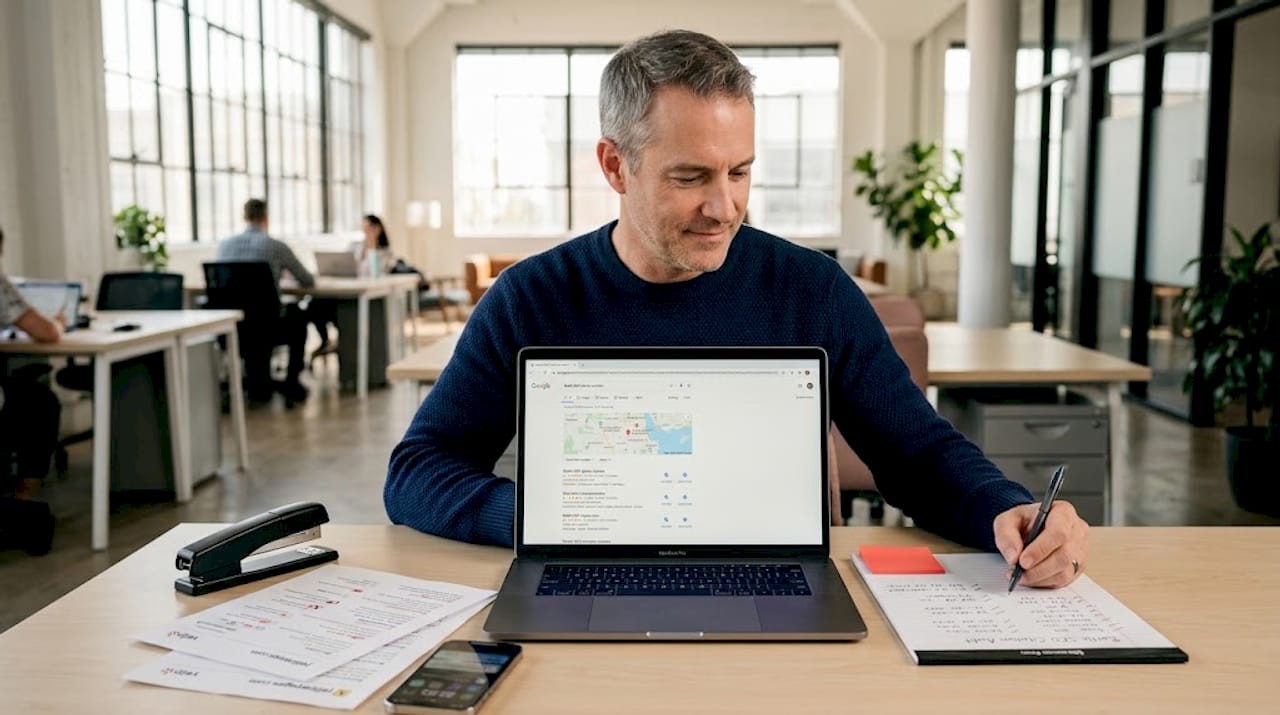
Battleseo’s resource on link building for local SEO covers specific tactics for earning local authority backlinks in competitive U.S. markets.
5. Monitor your local search performance and adapt regularly
Executing local search optimization tips without measuring results is like driving without a speedometer. You might be making progress, but you will not know when to adjust. Businesses that win local pack rankings do so by actively managing every element of their profile and making data-driven adjustments monthly.
Here is a practical monitoring routine to build:
- Track local pack rankings weekly. Tools like BrightLocal or the local results section in Google Search Console let you see where you rank for your core service keywords in your city. Watch for drops that coincide with profile changes or competitor moves.
- Review GBP insights monthly. Your profile dashboard shows profile views, click-to-call events, website clicks, and direction requests. A decline in direction requests with steady views often means your address or map pin needs attention.
- Measure review velocity. Count how many new reviews you received in the last 30 and 90 days. If that number is flat or declining, your review acquisition process needs work.
- Audit your top local competitors quarterly. Look at their GBP completeness, review counts, website content, and citation footprint. This tells you where your gaps are relative to who is currently outranking you.
- Adjust based on what the data shows. If your posts are generating profile views but not calls, your call-to-action may need reworking. If your ranking dropped after changing your primary category, test reverting it. Local SEO responds to iteration.
My honest take on active GBP management and review velocity
I have worked with independent business owners across the U.S. for years, and the pattern I see most consistently is this: businesses that treat their Google Business Profile as a living, breathing marketing channel outperform those who set it up once and forget about it.
I have watched businesses with fewer total reviews outrank competitors who had three times as many, simply because their recent review velocity was stronger and their profile activity was consistent. Google’s AI actively scans GBP reviews, Q&A, and posts to generate answers in local search results. A stale profile does not just rank lower. It gets fewer opportunities to appear in AI-generated answers, which is increasingly how local searches resolve in 2026.
The time investment to manage a GBP well is about 30 to 60 minutes per week. That includes a new post, a photo upload, checking and responding to reviews, and glancing at your insights. That small commitment produces outsized results compared to almost anything else a local business can do in marketing.
My advice is to start with your profile and your reviews before worrying about anything else. Build outward from that base. You can always add content pages and backlinks later. But a weak GBP will drag everything else down regardless of what you do off-site.
— Mike
Ready to put these strategies to work?
Understanding the tactics is one thing. Executing them consistently while running a business is another challenge entirely. Battleseo specializes in local SEO for independent U.S. business owners, combining Google Business Profile optimization, review management, local content strategy, and AI-powered local visibility into one coordinated system.
If you are ready to stop guessing and start ranking, explore Battleseo’s local SEO services to see how the Local Command Directive™ framework positions your business as the dominant local authority in your niche. Spots are limited to one business per category per market, so the sooner you act, the better your competitive position.
FAQ
How do I rank higher in local search results?
Focus on three areas: optimizing your Google Business Profile with complete, fresh information; generating consistent new reviews with a strong average rating; and building accurate citations across general and industry-specific directories. All three directly influence Google’s relevance and prominence signals.
What is the most important local search ranking factor?
Google Business Profile signals account for the largest share of local pack ranking weight at around 32%, making it the single highest-leverage factor for most local businesses. Review signals follow at 16%.
How many reviews do I need to rank locally?
There is no fixed number, but recency matters more than total count. Reviews received within the past 90 days carry more ranking weight than older ones. Targeting at least one to two new reviews per month maintains the velocity Google’s algorithm favors.
Do keywords in reviews really help local SEO?
Yes. Keywords that appear naturally in customer reviews contribute to approximately 22% of the factors found in top 10 local rankings. You cannot ask customers to use specific words, but you can describe your services clearly in your responses, which reinforces those keyword themes.
What is NAP consistency and why does it matter?
NAP stands for name, address, and phone number. Keeping this information identical across every online directory prevents Google from treating your business as multiple entities, which protects and strengthens your prominence signals in local search.