
TL;DR:
- Focusing on on-page SEO best practices such as titles, meta descriptions, and URLs improves local search visibility more than ad spend or domain age. Keyword placement in the opening paragraph and structured headings significantly enhance relevance and AI-driven results for independent businesses. Regular technical audits, optimized images, and authoritative content grounded in local expertise are essential for sustained rankings in 2026 and beyond.
Most independent business owners understand that showing up in search results matters. What fewer realize is that the gap between page one and page three often comes down to a handful of on-page SEO best practices, not ad spend or domain age. Search engines and AI platforms like ChatGPT, Perplexity, and Gemini are increasingly prioritizing pages that signal clear relevance, credibility, and local context. This guide walks you through an actionable on-page SEO checklist built specifically for independent business owners who want stronger local search visibility and a foothold in AI-driven results.
Table of Contents
- How to set strong SEO foundations with titles, meta descriptions, and URLs
- Keyword placement and heading structure for maximum visibility
- Optimizing images and links to support SEO and user experience
- Technical SEO and content freshness: Core Web Vitals and audits
- Prioritizing and applying on-page SEO best practices effectively
- Why traditional SEO tactics alone aren’t enough for independent businesses in 2026
- Boost your local presence with expert SEO and AI optimization services
- Frequently asked questions
Key Takeaways
| Point | Details |
|---|---|
| Optimize metadata | Craft title tags and meta descriptions with primary keywords near the front for better ranking and click-through. |
| Strategic keyword use | Use keywords naturally in the first 100 words and multiple headings to boost AI and Google relevance. |
| Image and link optimization | Add descriptive alt text and strong external and internal links to enhance SEO trust and crawlability. |
| Technical SEO matters | Improve Core Web Vitals metrics and conduct regular SEO audits to maintain site performance and rankings. |
| Evolve with SEO trends | Focus on E-E-A-T signals and local schema to meet AI-driven search demands and stand out locally. |
How to set strong SEO foundations with titles, meta descriptions, and URLs
Think of your title tag, meta description, and URL as the front door to your business online. If they’re unclear or generic, visitors won’t knock. These three elements are the first signals search engines evaluate and the first things a potential customer sees in the results page.
Title tags carry significant weight. Title tags should be 50 to 60 characters long, with your primary keyword placed at the very beginning. Google truncates titles at roughly 580 to 600 pixels, which is about 60 characters. Front-loading your keyword means it survives the cut and earns priority weighting. For a local business, a title like “Plumber in Austin, TX | Fast Same-Day Service” outperforms a generic “Welcome to Our Plumbing Company” every time.
Meta descriptions don’t directly affect rankings, but they directly affect whether someone clicks. Target 150 to 160 characters on desktop and 120 on mobile, include your keyword naturally, and write to the reader’s intent. Google uses your meta description as written roughly 30 to 40 percent of the time. When it doesn’t, it pulls from your page body, which is another reason your opening paragraph matters.
URL slugs should be short, readable, and keyword-rich. A clean, descriptive URL with dashes between words (not underscores) improves both indexing speed and trustworthiness. Compare "/services/plumbing-repair-austinto/page?id=4982`. The first tells Google and users exactly what the page covers.
Here’s a quick checklist for each element:
- Title tag: 50 to 60 characters, keyword first, unique per page
- Meta description: 150 to 160 characters, keyword included, action-oriented
- URL: lowercase, dashes between words, no dates or stop words, keyword present
- Avoid duplicate titles across your site, as Google will rewrite them or ignore them entirely
Pro Tip: Write your title and meta description together. If they tell the same story with a clear benefit, click-through rates improve. If your title promises “same-day service” and your description mentions pricing, you’re giving searchers two compelling reasons to click.
Understanding how internal links improve authority is the natural next step once your metadata foundation is in place.
Now that you understand foundational metadata, let’s explore how to craft content and headings that boost relevance and user engagement.
Keyword placement and heading structure for maximum visibility
Getting your keyword into the right spots on the page is not about repetition. It’s about placement. Search engines, and increasingly AI systems, read pages in a specific order. You want your keyword to appear where they look first.
The opening paragraph carries outsized weight in how Googlebot and AI Overview systems evaluate page relevance. Getting your primary keyword into the first 100 words signals topic focus immediately. It also positions that paragraph for featured snippet extraction, which is exactly where you want to be for zero-click visibility.
Here’s a practical heading structure to follow:
- H1: One per page, matching the intent and keyword of your title tag exactly. This is not a place for creativity. Precision wins.
- H2 headings: Use for major sections. Include your primary keyword naturally in at least two of them. This creates multiple snippet targets across a single page.
- H3 headings: Use for supporting detail under each H2. Good for Q&A formatting, which AI systems favor heavily.
- Never skip heading levels. Going from H1 to H3 confuses both users and crawlers about your content hierarchy.
The H1 should match the title tag in keyword usage, though the phrasing can vary slightly. Every H2 is an opportunity to capture a secondary search query while reinforcing your main topic.
For AI optimization specifically, structuring content as question followed by direct answer is highly effective. AI Overviews frequently extract answer blocks from pages that front-load their response in one to three sentences. Write your H2 sections so that the first two sentences can stand alone as a complete answer.
- Use your primary keyword in the H1 and at least two H2 headings
- Place your keyword naturally within the first 100 words
- Write H3 sections as question-and-answer blocks where possible
- Avoid vague headings like “More information” or “Details”
Pro Tip: Run your draft through a simple word count check. If your keyword doesn’t appear until paragraph four, move a version of it up. Even one natural use in the opening paragraph makes a measurable difference in how Googlebot and AI systems classify the page.
Learning how content marketing supports SEO gives you a wider view of how your headings and keyword placement connect to a longer-term visibility strategy.
With your content properly structured using effective keyword placement and headings, next we consider optimizing images and link strategies to improve relevance and trust.
Optimizing images and links to support SEO and user experience
Images and links are often treated as afterthoughts. That’s a missed opportunity. Both carry real SEO value and both are easy to fix with a clear checklist in hand.
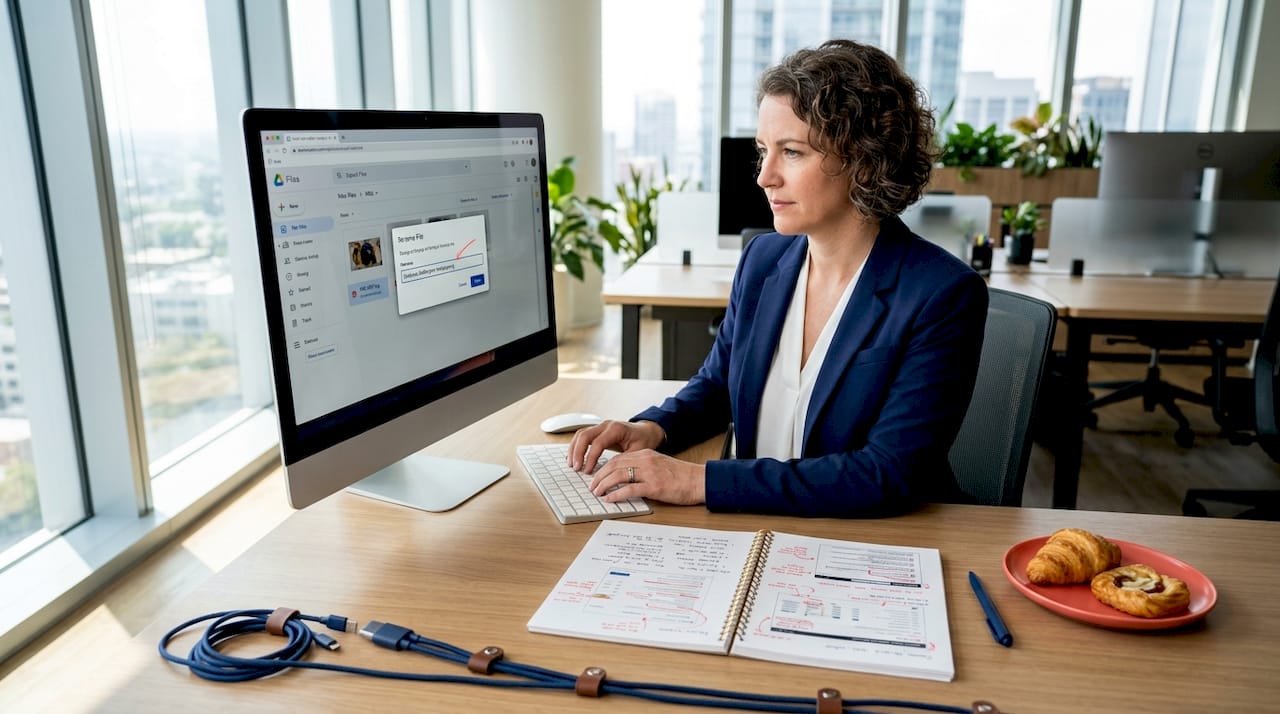
Image optimization starts with the filename. Before you upload an image, rename it. “plumber-austin-water-heater-repair.jpg” gives Google meaningful context. “IMG_4892.jpg” gives it nothing. Then write alt text that describes the image concisely and includes one keyword where natural. Alt text under 125 characters with a relevant keyword helps Google understand the image and improves your presence in image search and AI-powered results. Skip alt text on purely decorative images, but always add it to charts, screenshots, infographics, and product photos.
External links build context and credibility. Linking to three or more high-authority external sites tells search engines your content exists within a trustworthy topic ecosystem. Link to sources that genuinely support your claims: local government sites, industry associations, or credible publications.
Internal links are equally important, especially for independent businesses without large link profiles. They distribute authority across your site and help crawlers discover new pages. The key is anchor text. Descriptive anchor text like “water heater repair checklist” communicates page relevance clearly. Vague anchors like “click here” or “read more” do the opposite.
Here’s a quick image and link checklist:
- Rename image files with keywords before uploading
- Write unique alt text under 125 characters for every meaningful image
- Link out to three or more credible external sources per page
- Use descriptive, keyword-relevant anchor text for all internal links
- Avoid linking to the same internal page with different anchor text on the same page
Pro Tip: Audit your existing pages for broken internal links. A single broken link to a key service page can cut off crawl paths and signal neglect to search engines. Free tools can scan your site in minutes.
Dig deeper into how internal links build authority and learn proven link building strategies that pair well with on-page optimization.
Alongside images and links, your website’s performance and technical SEO are vital to ranking and user experience, discussed next.
Technical SEO and content freshness: Core Web Vitals and audits
You can do everything else right and still rank poorly if your site loads slowly or shifts around on mobile. Google’s Core Web Vitals are ranking signals that measure three specific performance behaviors: load time, visual stability, and responsiveness. They have defined thresholds that separate good performance from poor.
| Metric | What it measures | Good | Needs improvement | Poor |
|---|---|---|---|---|
| LCP (Largest Contentful Paint) | How fast main content loads | Under 2.5s | 2.5s to 4.0s | Over 4.0s |
| CLS (Cumulative Layout Shift) | Visual stability as page loads | Under 0.1 | 0.1 to 0.25 | Over 0.25 |
| INP (Interaction to Next Paint) | Responsiveness to user input | Under 200ms | 200ms to 500ms | Over 500ms |
Hitting the “Good” threshold on all three improves both ranking and user experience. Most independent business websites struggle with LCP, usually because images aren’t compressed or the server response is slow.
Beyond Core Web Vitals, regular audits keep your site competitive. Quarterly full audits covering 42 or more checklist items catch issues that accumulate after updates: broken links, missing meta tags, duplicate content, and page speed regressions. Monthly checks on high-impact items like title tags and Core Web Vitals scores prevent those issues from compounding into ranking drops.
Here’s a practical audit schedule:
- Monthly: Check Core Web Vitals in Google Search Console, review click-through rates on top pages, spot-check title tags and meta descriptions on any recently updated pages.
- Quarterly: Full technical audit including crawl errors, image compression, internal link structure, duplicate content, and schema markup validation.
- After major updates: Any time you redesign a page, change your CMS, or add new service areas, run a targeted audit before and after.
Refreshing existing content matters just as much as publishing new pages. Pages with updated statistics, current local references, and recent publication dates consistently outrank stale content on equal-authority sites.
Keep your Google Business Profile in sync with your on-page content for stronger local signal consistency.
Having covered foundational SEO elements, content, links, and tech, let’s look at how to prioritize and apply these best practices effectively for your business.
Prioritizing and applying on-page SEO best practices effectively
Not everything on an SEO checklist deserves equal attention in the same week. Independent business owners with limited time need to know where to start for the highest return.
The single highest-ROI fix most businesses overlook is the opening paragraph. The first 100 words carry disproportionate weight because Googlebot reads them immediately after evaluating the title, H1, and URL. Weak, vague openings waste that window. Rewriting your top five pages to open with a clear, keyword-relevant statement of what you do and where you serve can move the needle faster than any other single change.
For local businesses, AI Overviews now appear in 30 to 40 percent of queries. Structuring pages with question-and-answer blocks, LocalBusiness schema markup, and neighborhood-level geographic references gives you a real chance of being cited in those results even without earning a click.
| Priority | Task | Impact | Time to complete |
|---|---|---|---|
| 1 | Rewrite first 100 words with keyword | High | 15 to 30 min per page |
| 2 | Fix title tags (50 to 60 chars, keyword first) | High | 5 to 10 min per page |
| 3 | Add LocalBusiness schema markup | High for local | 30 to 60 min |
| 4 | Improve Core Web Vitals (compress images first) | Medium to high | 1 to 4 hours |
| 5 | Add Q&A sections targeting local queries | Medium | 30 min per section |
- Focus the first two weeks on title tags, meta descriptions, and opening paragraphs
- Add schema markup before chasing more backlinks
- Write at least one Q&A section per service page targeting a question your customers actually ask
- Update content quarterly to reflect current local events, regulations, or service area changes
Pro Tip: Use Google Search Console’s “Performance” report to find pages with high impressions but low click-through rates. Those pages rank but don’t earn the click, meaning better title tags and meta descriptions alone can increase traffic without any new content.
Start with quick local SEO wins and pair that foundation with a full AI search optimization strategy to cover both traditional and emerging search channels.
Why traditional SEO tactics alone aren’t enough for independent businesses in 2026
Here’s the uncomfortable reality: running through a checklist and hitting every technical marker no longer guarantees visibility. The rules changed, and most checklist articles haven’t caught up.
Google’s Search Quality Evaluator Guidelines now treat E-E-A-T signals, which stands for Experience, Expertise, Authoritativeness, and Trustworthiness, as direct inputs to ranking quality. That means author credentials, transparent sourcing, and demonstrable real-world experience matter in a way they simply didn’t five years ago. A page written by an anonymous “admin” with no author bio, no linked credentials, and no citations competes poorly against a page where the author’s expertise is visible and verifiable.
This is especially consequential for independent businesses. You have something AI-generated content can never replicate: genuine local experience. A plumber in Hartford who writes about the specific pipe materials common in pre-1950s New England homes, and names the neighborhoods where those homes are concentrated, is producing content that no AI writes by default. That specificity is both an E-E-A-T signal and a local relevance marker.
The businesses we see winning in AI-driven search aren’t necessarily the ones with the most backlinks. They’re the ones whose pages answer specific questions with clear expertise, cite verifiable sources, name real locations, and identify a real human being as the author. Add LocalBusiness and FAQPage schema on top of that, and you create a page that both Google and AI systems can confidently cite.
If you haven’t adapted your SEO strategy for 2026, now is the time. Checklists are a starting point. Authority is what closes the gap.
Boost your local presence with expert SEO and AI optimization services
Knowing the on-page SEO best practices is one thing. Having the time, tools, and expertise to apply them consistently across every service page, blog post, and local landing page is another challenge entirely.
Battle SEO works exclusively with independent business owners to handle exactly this, from full on-page audits and content rewrites to LocalBusiness schema implementation and AI search visibility. Our local SEO services cover every element in this guide, applied to your specific market and service category. We also build the AI optimization layer that gets you cited in ChatGPT, Perplexity, and Gemini results alongside traditional rankings. We take on only one business per category per market, so your spot comes with a real competitive edge. See what’s available in your area and get started before a competitor claims it.
Frequently asked questions
What are the most important on-page SEO elements to optimize first?
Start with your title tags, meta descriptions, and the first 100 words of each page. Title tags should be 50 to 60 characters with your primary keyword front-loaded, as these elements signal relevance immediately to both search engines and potential visitors.
How does keyword placement impact local SEO?
Placing your primary keyword naturally in the first 100 words and in at least two H2 headings helps Google and AI systems identify your page’s local relevance. The first 100 words are prime territory for featured snippet and AI Overview extraction, which is especially valuable for local queries.
Why is image alt text important for SEO?
Image alt text gives search engines and AI systems context that visuals alone cannot provide. Alt text under 125 characters with a relevant keyword improves your presence in image search, supports accessibility, and helps AI platforms understand your page’s content more completely.
How often should I audit my website’s SEO performance?
Run a full SEO audit quarterly and perform monthly checks on high-impact items like title tags and Core Web Vitals. Quarterly full audits catch compounding issues before they become ranking drops, and monthly checks keep your most important pages performing at their best.